

“`html
The Paradox of the Digital Age: Why We Are Lonelier Than Ever
We live in an era of unprecedented connectivity. At the tap of a screen, we can broadcast our thoughts to thousands, peer into the living rooms of strangers halfway across the globe, and maintain a “friends” list that stretches into the thousands. Yet, beneath the surface of this hyper-connected reality lies a burgeoning crisis: a global loneliness epidemic. Despite having 5,000 followers, many individuals find themselves sitting alone on a Saturday night with no one to call in an emergency.
This phenomenon, often referred to as the “Loneliness of the Well-Connected,” highlights a startling disconnect between digital metrics and genuine human intimacy. Having a massive audience is not the same as having a support system. In fact, for many, the pressure to maintain a digital persona actually increases feelings of isolation. To understand why 5,000 followers can mean zero friends, we must look at the science of social interaction, the nature of digital “performance,” and the difference between being known and being seen.
The Science of Dunbar’s Number: Why Our Brains Can’t Keep Up
Evolutionary psychology offers a compelling explanation for why digital “friendships” often feel hollow. Anthropologist Robin Dunbar famously proposed “Dunbar’s Number,” a theoretical limit to the number of people with whom one can maintain stable social relationships. According to Dunbar, the human brain is physiologically capable of managing approximately 150 meaningful connections.
Within that 150, there are layers:
- The Inner Circle (3-5 people): Your closest confidants and support system.
- The Sympathy Group (12-15 people): Close friends you see regularly.
- The Meaningful Layer (50 people): People you would invite to a personal celebration.
- The Acquaintance Layer (150 people): People you know well enough to join for a drink if you ran into them.
When your “following” reaches 5,000, you have exceeded the biological capacity of your brain by over 3,000%. These extra connections are not friends; they are an audience. The attempt to treat a massive digital crowd as a social circle leads to cognitive overload and emotional burnout, leaving the individual feeling stretched thin and ultimately alone.
The Performance Trap: Why Curation Kills Connection
The primary reason social media fails to alleviate loneliness is that it prioritizes performance over presence. To maintain a large following, users often feel the need to curate a “personal brand.” This involves highlighting successes, filtering out flaws, and projecting an idealized version of life.
Authentic friendship, however, is built on vulnerability. It is found in the “unfiltered” moments—the shared grief, the midnight anxieties, and the mundane realities of daily life. When you interact with 5,000 followers, you are rarely being your authentic self; you are playing a character. This creates a “double-sided loneliness”:
- The Loneliness of the Mask: You feel lonely because the people “connecting” with you aren’t connecting with you, but with the version of you that you’ve created.
- The Loneliness of Comparison: As you scroll through others’ curated feeds, you perceive their lives as perfect, worsening your own sense of inadequacy and isolation.
Passive Consumption vs. Active Interaction
Another reason for the “zero friends” phenomenon is the shift from active socializing to passive consumption. In the physical world, friendship requires effort: showing up, listening, and engaging in two-way dialogue. On social media, “connection” is often reduced to “scrolling.”
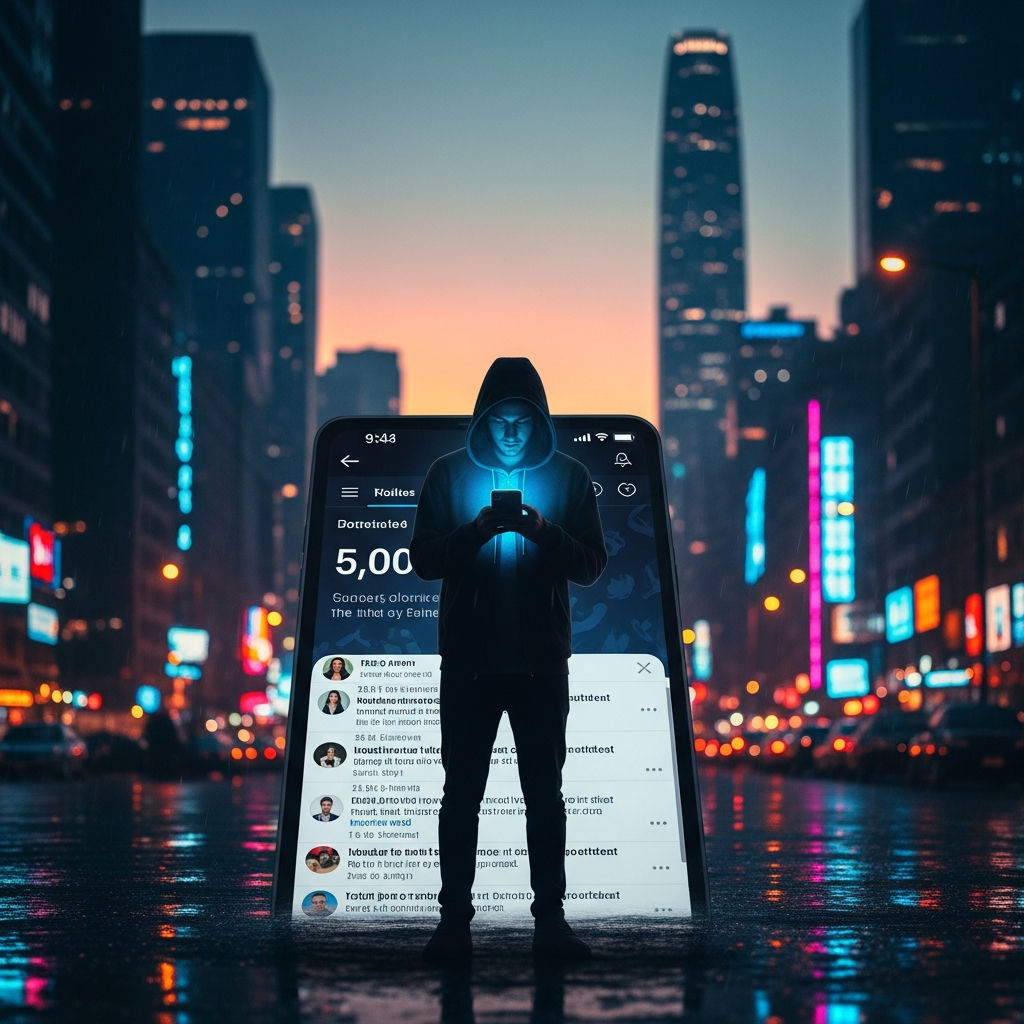
Research indicates that passive social media use—scrolling through feeds without interacting—is strongly correlated with increased depression and loneliness. When we watch our “friends” live their lives through a screen, we are spectators, not participants. We feel like we know what they are doing, so we don’t bother to call or text them. This creates a “false sense of intimacy” where we feel connected to others without the emotional labor required to sustain a real bond.
The Erosion of “Third Places”
Sociologists often talk about “third places”—spaces like coffee shops, libraries, and parks where people gather outside of home (the first place) and work (the second place). As our social lives have migrated online, these third places have declined. We no longer bump into neighbors or have spontaneous conversations with acquaintances. Instead, we retreat into digital echo chambers where the “5,000 followers” exist only as pixels on a screen, providing no physical presence or localized community.
The Dopamine Loop: Replacing Intimacy with Validation
Social media platforms are designed to trigger dopamine releases through “likes,” “shares,” and “comments.” This creates a feedback loop where we begin to crave digital validation more than emotional intimacy. A “like” provides a quick hit of pleasure, but it lacks the oxytocin—the “bonding hormone”—produced by eye contact, touch, or shared laughter.
When we prioritize the quantity of engagement over the quality of connection, we end up “starving in a land of plenty.” We may receive hundreds of notifications, but none of them provide the deep emotional nourishment that comes from a single, heartfelt conversation with a true friend.
How to Turn Digital Connections into Real Friendships
If you find yourself feeling lonely despite a robust social media presence, it is time to shift your strategy. You don’t need to delete your accounts, but you do need to re-prioritize how you spend your emotional energy. Here are steps to reclaim genuine connection:
- Conduct a “Friendship Audit”: Look at your 5,000 followers and identify the 5-10 people you actually want to know in real life. Focus your energy on them.
- Move from the Feed to the DM (and then to the Phone): Stop commenting on public posts. Start sending private messages that lead to phone calls or in-person meetups.
- Prioritize Vulnerability: Share something real with a trusted few. Stop trying to be “relatable” to an audience and start being “known” by a friend.
- Schedule Offline Time: Set “digital sunsets” where you put the phone away and engage in activities that foster community, such as joining a local club, sports team, or volunteer group.
- Practice “Deep Listening”: When you do meet people, put your phone face down. Give them your undivided attention—a rare and precious gift in the 21st century.
Conclusion: Quality Always Trumps Quantity
The number at the top of your profile is a metric of reach, not a metric of worth or belonging. In the end, the human heart doesn’t care about “engagement rates” or “viral reach.” It cares about being understood, supported, and loved. Having 5,000 followers is a professional asset; having five true friends is a life-saving one.
Don’t let the noise of the digital crowd drown out the quiet necessity of real companionship. Loneliness in the digital age is a choice to prioritize the many over the few. By narrowing our focus and deepening our roots, we can escape the trap of the “well-connected” and find the meaningful intimacy we were built for.
“`